Text size
A
A+
A++
A+++
For the last three years, the public thought the AI race was about chatbots. It wasn’t.
It was always about something far bigger: infrastructure, raw power, automation at planetary scale, and who gets to build — and control — the operating system for the future.
In mid-2025, that quiet shift became impossible to ignore. Google went all-in at I/O with major agentic breakthroughs. Anthropic’s valuation and influence exploded. The Pentagon inked deals with frontier labs. And hyperscalers began throwing hundreds of billions at data centers.
The chatbot was just the demo. What’s coming next is the infrastructure layer that runs entire companies, militaries, scientific labs, and creative pipelines.
The Chatbot Phase Is Ending (2023–2025)
Remember when every headline pitted ChatGPT against Claude against Gemini? That era delivered impressive demos and hooked the world. But the companies building these models always saw further. Chat was the gateway.
By late 2025 into 2026, the internal goalposts moved from “helpful assistant” to autonomous agents that can plan, reason, act, and iterate with minimal supervision. Google’s Jules coding agent (now in public beta), Project Astra/Mariner, and similar pushes from OpenAI and Anthropic all point the same direction.
We’re entering the age where AI doesn’t just answer questions — it owns workflows.
The New Arms Race Is Compute and Infrastructure
The clearest signal? Money — insane, eye-watering money.
The top hyperscalers (Microsoft, Google, Amazon, Meta, Oracle) are projected to spend $660–690 billion in capex in 2026 alone, the vast majority on AI data centers, chips, power, and networking.
Nvidia remains the undisputed hardware king. Its GPUs power the overwhelming majority of frontier training runs, and Jensen Huang continues to emphasize that AI is now essential infrastructure requiring trillions in total buildout.
This isn’t just software anymore. It’s industrial-scale energy, hardware, and networking strategy.
Why Governments Suddenly Care: AI as National Power
Nothing signals seriousness like the Pentagon getting involved.
In 2025–2026, the U.S. Department of Defense awarded major contracts to OpenAI, Google, Microsoft, Nvidia, and others for frontier AI on classified networks. These deals focus on agentic workflows for intelligence analysis, logistics, simulation, and decision support.
Meanwhile, Anthropic’s public standoff with the Pentagon over guardrails (autonomous weapons and surveillance) highlights how high the stakes have become. AI superiority is now treated on par with nuclear or cyber capabilities.
The Real Goal: AI That Runs Entire Workflows
Here’s the leap most people still miss.
Future AI won’t be something you prompt once. It will be systems of agents that:
Autonomously code and debug large projects (see Google’s Jules)
Conduct multi-week research campaigns
Optimize global logistics in real time
Accelerate scientific discovery
Manage entire business operations with human oversight only at the strategy level
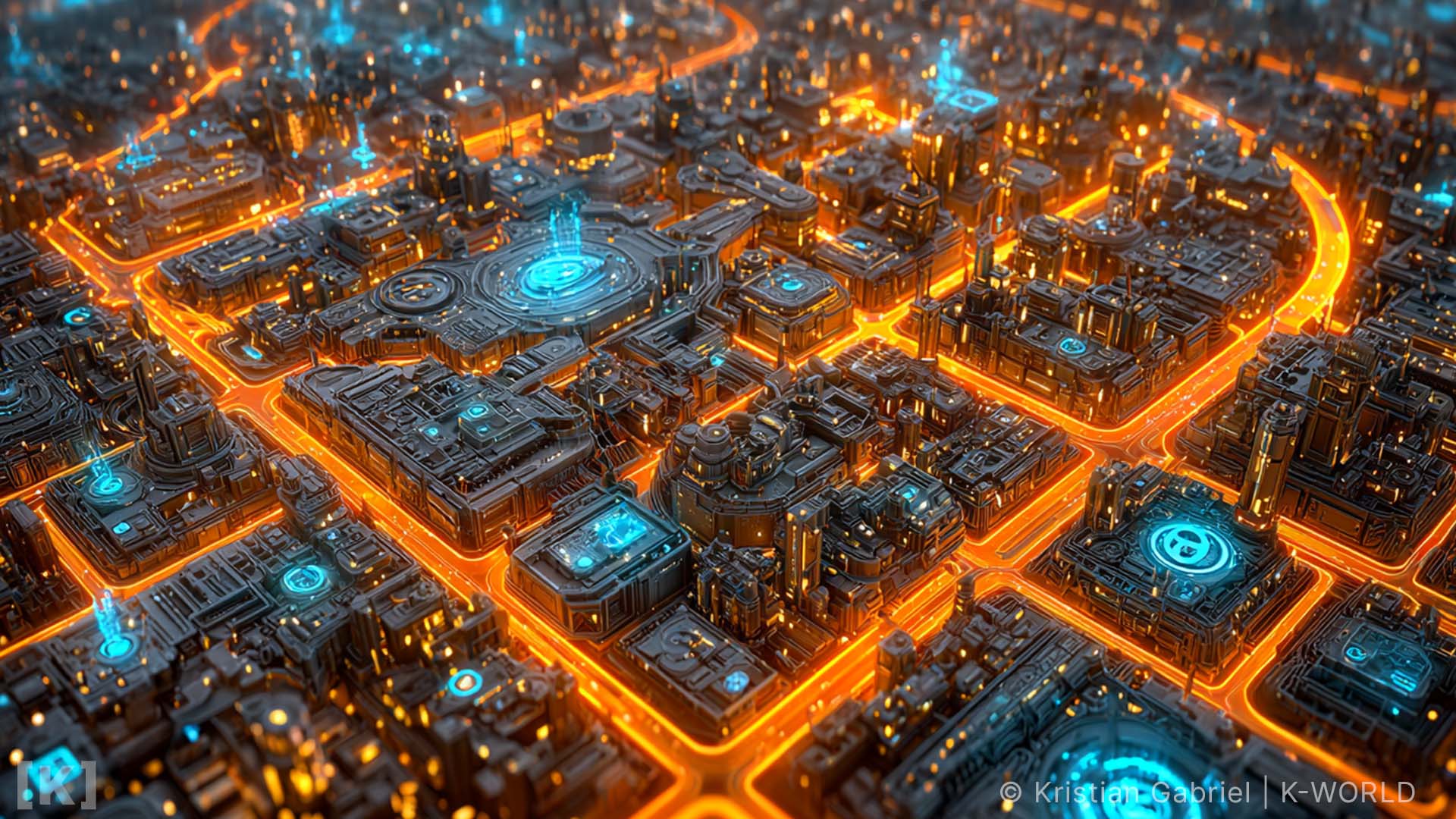
This is the “global operating layer” — AI that sits underneath industries the way electricity or the internet does today.
Why This Matters Beyond Tech
Strip away the hype, and the central thesis emerges:
The public still sees apps and chat windows. The builders see a new foundational layer for civilization.
This layer will reshape energy demand, labor markets, education, warfare, and global power structures. We’re not just building smarter software — we’re wiring intelligence into the fabric of society at unprecedented speed and scale.
Risks abound (alignment, energy consumption, concentration of power), but the momentum is undeniable.
What Comes Next
2026–2027 will likely be remembered as the inflection years when AI stopped being a novelty and became infrastructure. Expect more breakthroughs in reliable long-horizon agents, physical robotics integration, and hybrid human-AI organizations.
The companies and nations that master this transition fastest will define the next decade.
The AI war isn’t about chatbots anymore. It’s about who architects the operating system of tomorrow.
And that story is only just beginning.